Official press kit
Buddha KA — The Diamond Sutra
17-track album · Released · Out now
Chicago-born independent artist, author, and founder of KAfrequency. Everything on this page is first-party and approved for editorial use.
For immediate release
Buddha KA Releases The Diamond Sutra — A 17-Track Philosophical Hip-Hop Album, Out August 19, 2026
The independent KAfrequency album examines inherited thought, conditioned desire, attention, and the measures people use to decide what a life is worth.
Independent recording artist and author Buddha KA released The Diamond Sutra, a 17-track album, on August 19, 2026. The record is published first-party through KAfrequency, the artist-owned ecosystem he founded. The full track listing, album page, and song-by-song writing are live at buddhaka.com.
The Diamond Sutra is a philosophical hip-hop record built around a single line of inquiry: how much of what a person thinks, wants, fears, and measures was actually chosen. Across seventeen tracks the album works through perception, inherited thought, conditioned desire, identity, attachment, language, attention, internal systems, and alternative measures of value. It borrows the title of a classical text as an intellectual frame — a record about cutting through appearance — rather than presenting itself as an adaptation, translation, or commentary on scripture.
The album's argument develops in sequence. "Borrowed Eyes" and "Borrowed Minds" open the case that most inner life is secondhand, and that repetition is not revelation. "Who Taught You to Want?" turns the question toward desire itself, asking where an appetite was installed before asking whether it should be satisfied. "Break the Frame" examines manufactured reality — the framing that arrives before a person is old enough to consent to it. "Spiritual Mechanics" treats the interior as an engineered system of attention, habit, intention, and consequence rather than as vague feeling. The closing track, "Different Math," proposes a different accounting: a value system in which what counts is not what the standard ledger counts.
Around that spine, the record moves between craft and interiority. "Collect My Thoughts" and "The Pen Breathes" treat writing as a living discipline rather than an output. "Letter From the Higher Self" addresses the part of a person that already knows, and "Create" turns that knowing into something that exists outside the person who held it. "Tunnel View," "Before the Bloom," and "Field of Dreams" hold the long middle of any real change — narrowed sight, unfinished growth, and the imagination that keeps a person walking. "Diamond," "Speak Life," "Unleash Divine," and "Elevate" carry the album's pressure, language, release, and ascent.
Buddha KA's musical framework, KA Flow, integrates hip-hop, soul and R&B, spoken wisdom, and spiritual science into one language. The Diamond Sutra is written inside that framework and continues the sutra cycle that includes The Inner Flame Sutra. His written work — 47 Gates of Consciousness, The Crystallized Mind, and companion working manuals — is built as practice systems rather than commentary, and the album is made with the same intent: records made to be returned to, not consumed once.
Buddha KA operates the entire ecosystem himself, outside the traditional label system. Music, books, daily spoken activations, visual worlds, and consciousness systems are published under one canon at buddhaka.com, which also hosts a dedicated editorial page for each of the album's seventeen songs.
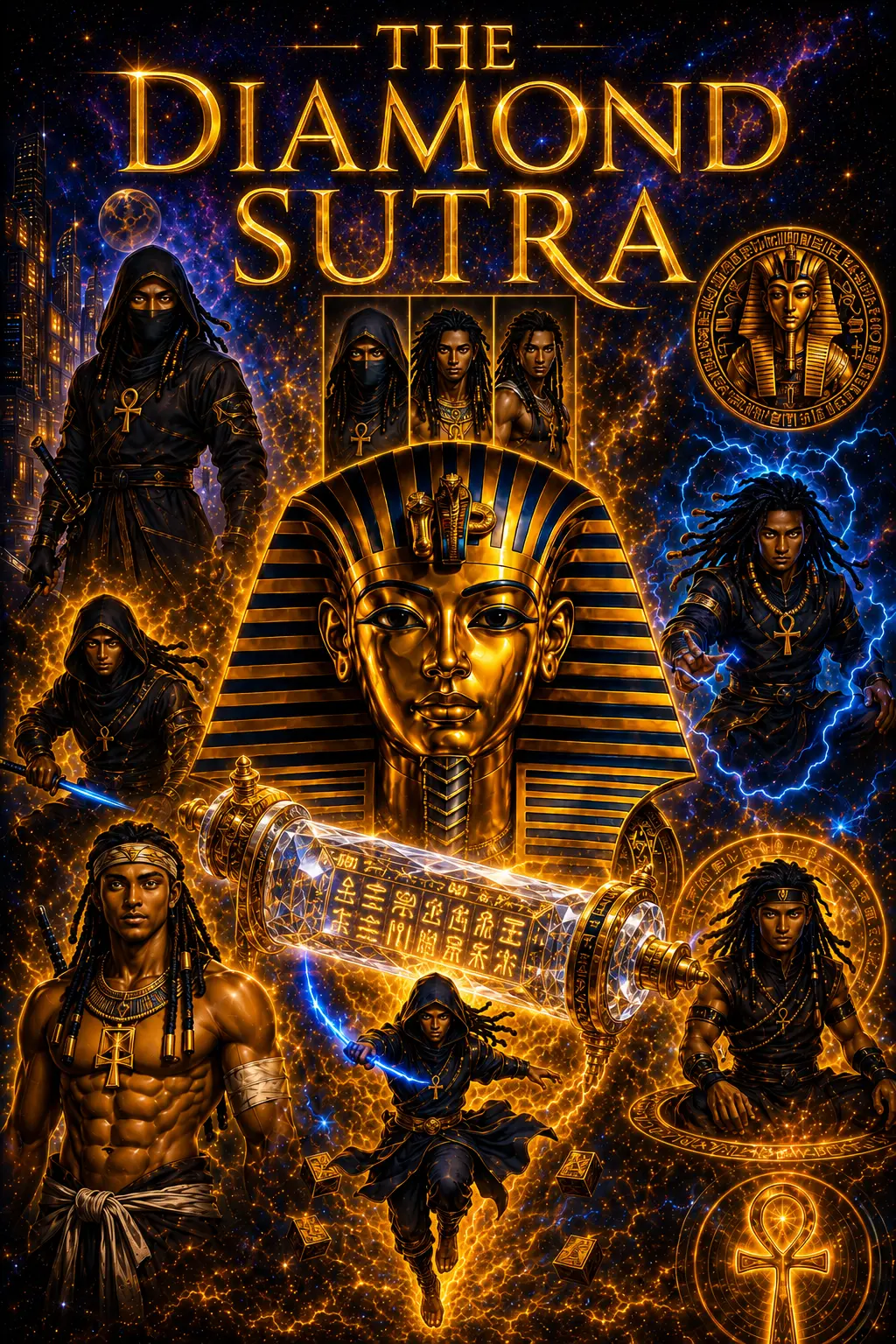
The Diamond Sutra was released August 19, 2026. The album page at buddhaka.com/music/the-diamond-sutra carries the full track listing and cover artwork.
Media, podcast, radio, playlist, and partnership inquiries can be sent through the official contact route at buddhaka.com/contact, marked Press / Media Inquiry. Approved artwork, portrait, biographies, and a machine-readable press kit are available on this page and at buddhaka.com/press.
About KAfrequency — KAfrequency is the artist-owned creative ecosystem founded and architected by Buddha KA (Curtis Shores). It unites music, books, daily spoken activations, visual worlds, and consciousness systems under one canon, published first-party at buddhaka.com.
Album synopsis
The Diamond Sutra is an album about ownership of the inner life. Not ownership in the commercial sense — ownership in the sense of authorship. Its central suspicion is that a person can go an entire lifetime running thoughts they never wrote, chasing wants they never chose, and measuring a life with a ruler handed to them before they could read it.
The seventeen songs function less like a playlist and more like an argument with movements. The first movement is about the instrument: writing as a discipline that clarifies thought rather than decorates it. The second movement is diagnostic — borrowed sight, borrowed thinking, manufactured framing, installed desire. This is where the record does its hardest work, and it does it without contempt for the listener; the position throughout is that conditioning is ordinary, not shameful, and that noticing it is the only unusual act.
The third movement turns constructive. If the interior is a system, it can be examined: attention allocates, habit compounds, intention sets direction, and consequence returns. That is the engineering language the album uses instead of atmosphere. The record refuses the softness of general spirituality — it wants mechanisms, not moods.
The fourth movement is endurance. Narrowed vision, unfinished growth, low signal, the long stretch where nothing visible confirms the work. The album stays in that stretch longer than most records would, because that is where its thesis is actually tested.
The close is an accounting. "Different Math" is the record's proposition rather than its conclusion: that value can be counted differently, and that most people are solvent in a currency they were never taught to read. Nothing is resolved for the listener. The album's diamond image is a cutting edge, not a trophy — clarity as an operation performed on perception.
Formally, the record sits where conscious hip-hop, contemplative inquiry, and street-rooted plain speech overlap. It uses the title of a classical text as a frame for that inquiry, not as a claim of scholarship or religious authority. Its ambition is smaller and harder than transformation talk: to leave a listener suspicious of one inherited thought they had never questioned.
Release fact sheet
- Artist
- Buddha KA
- Title
- The Diamond Sutra
- Type
- Album
- Release date
- August 19, 2026
- Track count
- 17
- Status
- Released — out now
- Framework
- KA Flow — hip-hop, soul/R&B, spoken wisdom, spiritual science
- Imprint
- KAfrequency (artist-owned, independent)
- Origin
- Chicago, Illinois (artist born)
- Official website
- buddhaka.com
- Album page
- buddhaka.com/music/the-diamond-sutra
- Artist page
- buddhaka.com/artist/buddha-ka
Full track listing — 17 songs
Each title links to its own editorial page. No durations, ISRCs, or streaming links are published before release.
Selected story angles
Suggested lines of inquiry for interviews and features. These are open hooks, not claims of existing coverage.
Who teaches a person what to want?
Desire is usually treated as personal. The album treats it as installed — traceable to a source, a market, a family, a screen. A conversation about where an appetite came from before asking whether it deserves to be fed.
Read the writing behind this songInherited thought versus original thought
The record's claim that repetition is not revelation: how much of a worldview is genuinely reasoned, and how a writer tests which of his own positions he actually arrived at.
Read the writing behind this songWho built the frame you're looking through?
Manufactured reality, consent given before understanding, and identity assembled out of framing. An angle for shows covering media, attention, and belief formation.
Read the writing behind this songSpiritual inquiry without vague spirituality
The album's insistence on mechanisms — attention, habit, intention, consequence — instead of atmosphere. Why the interior is described in engineering language rather than mood language.
Read the writing behind this songWhat "different math" means as a value system
Sacred accounting: measuring a life with a ledger other than the inherited one, and what it costs to change the unit of measure.
Read the writing behind this songWriting as a living discipline
How the pen functions as a thinking instrument in Buddha KA's process — a discussion of practice, revision, and mirror writing rather than of lyrics as product.
Read the writing behind this songBuilding an artist-owned ecosystem outside the label system
Music, books, daily spoken activations, visual worlds, and consciousness systems published first-party under one canon — the operational story behind an independent release.
Approved biographies
Short bio · ~75 words
Buddha KA is a Chicago-born independent recording artist and author, and the founder of KAfrequency — an artist-owned ecosystem uniting music, books, daily spoken activations, visual worlds, and consciousness systems under one canon. His musical framework, KA Flow, joins hip-hop, soul and R&B, spoken wisdom, and spiritual science into a single language. He operates the entire ecosystem himself, outside the traditional label system. His album The Diamond Sutra was released August 19, 2026.
Medium bio · ~150 words
Buddha KA is a Chicago-born independent recording artist, author, and visual world-builder, and the founder of KAfrequency — the artist-owned ecosystem that unites his music, books, daily spoken activations, cinematic imagery, and consciousness systems under one canon. He was raised in Chicago until thirteen, moved to Wisconsin, and then to Las Vegas at sixteen, and has continued to live and work between Chicago, Texas, and Las Vegas. His musical framework, KA Flow, integrates hip-hop, soul and R&B, spoken wisdom, and spiritual science into a single cinematic language written to be replayed for years rather than consumed in a scroll. His written work includes 47 Gates of Consciousness, The Crystallized Mind, and companion working manuals built as practice systems rather than commentary. He operates the entire ecosystem himself, outside the traditional label system. His album The Diamond Sutra was released August 19, 2026.
Full bio · ~400 words
Buddha KA — legal name Curtis Shores — is a Chicago-born independent recording artist, author, visual world-builder, and founder of KAfrequency, a first-party creative ecosystem uniting music, books, daily spoken activations, cinematic imagery, and consciousness systems under one canon.
He was born and raised in Chicago until age 13, then moved to Wisconsin, and to Las Vegas at 16. In the years since, he has continued to live and work between Chicago, Texas, and Las Vegas. The geography sits inside the work: Chicago's rhythmic literacy, the interior stillness of the Wisconsin years, and the desert clarity of the Southwest each pressed into how his music sounds and how his writing thinks.
His musical framework, KA Flow, integrates hip-hop, soul and R&B, spoken wisdom, and spiritual science into one coherent musical language. KA Flow governs the KAfrequency catalog — including the sutra cycle, Golden Frequency, The Golden Wave, and Ascended and Armed — and is the throughline of The Diamond Sutra, released August 19, 2026.
His written work includes 47 Gates of Consciousness, The Crystallized Mind, and companion working manuals — books built as practice systems rather than commentary. The daily activations extend the same framework into a short, spoken practice for ordinary life. The visual arm builds Kemetic-rooted imagery, gold and obsidian tonality, and portraits engineered as symbols. The consciousness-systems arm is the interactive work: the 47 Gates journey, the Life Journey Map, the Academy paths, and the AI-supported study surface.
Buddha KA operates the entire ecosystem himself, outside the traditional label system, and treats music as inner technology rather than entertainment.
The Diamond Sutra, a seventeen-track album released August 19, 2026, continues that body of work. Written inside the KA Flow framework and published first-party through KAfrequency, it extends the sutra cycle that includes The Inner Flame Sutra, and carries a dedicated editorial page for each of its songs at buddhaka.com.
Key links
Media assets
Approved, first-party imagery. Download the original files and credit as listed.
The Diamond Sutra — official cover artwork
image/webp · 0.45 MB · Courtesy of Buddha KA / KAfrequency
Download original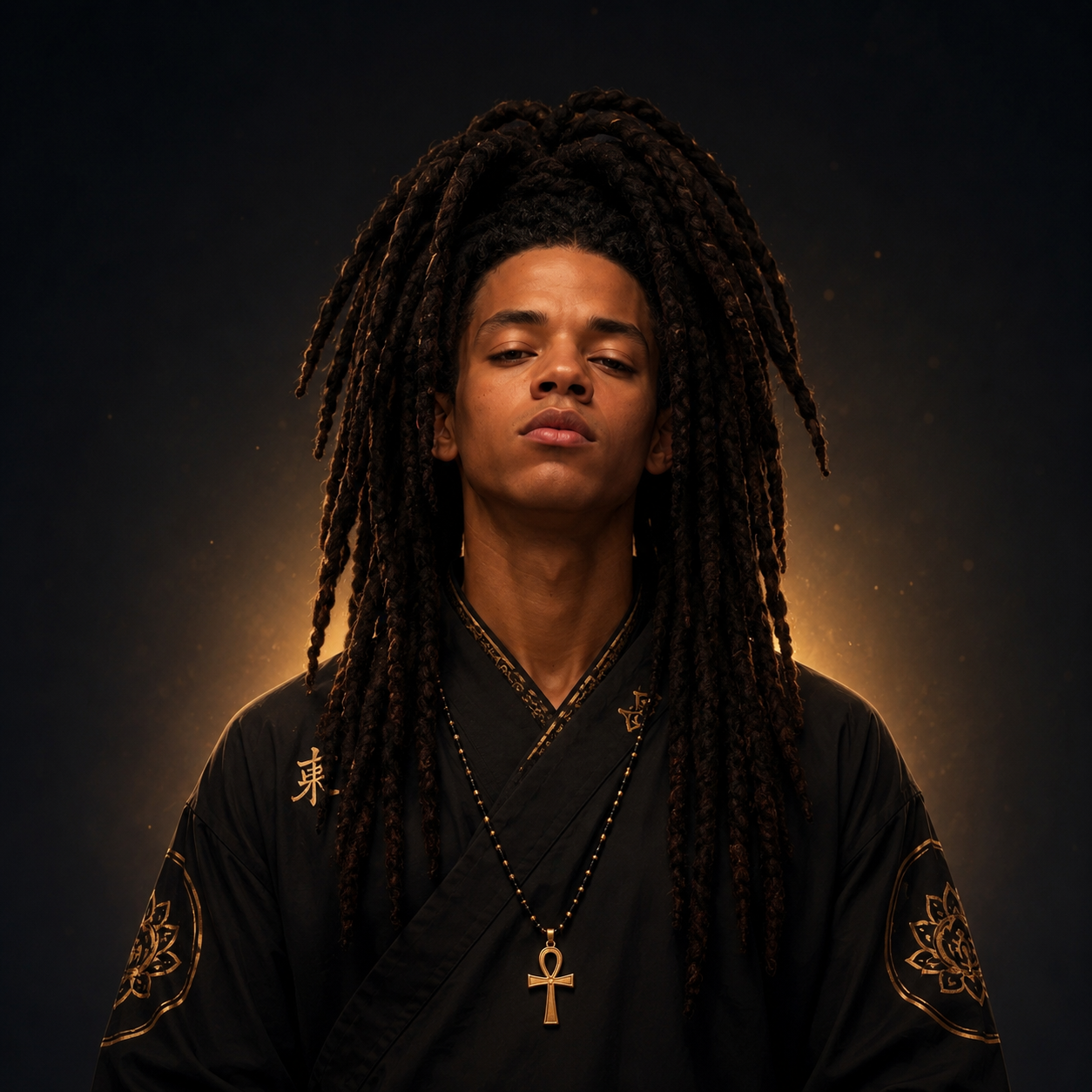
Buddha KA — official press portrait
image/png · 2.46 MB · Courtesy of Buddha KA / KAfrequency
Download original
Press & media inquiries
Interview requests, review copies, podcast bookings, radio, playlist, and partnership inquiries are handled through the official contact route. Mark the message “Press / Media Inquiry”.
Contact — press / media inquiryAsset usage
- Editorial outlets may use the supplied official artwork when covering Buddha KA or KAfrequency, crediting "Courtesy of Buddha KA / KAfrequency".
- Do not crop, recolour, overlay, or otherwise alter the official portrait or cover artwork.
- Advertising, product packaging, merchandise, and derivative works require written permission.
- Biographies and the boilerplate may be reproduced verbatim; please do not paraphrase biographical facts.
This article is published by the official Buddha KA / KAfrequency newsroom. It is a first-party statement, not independent press coverage.